
Jessica Rascionato of Citizens Bank Talks Shop
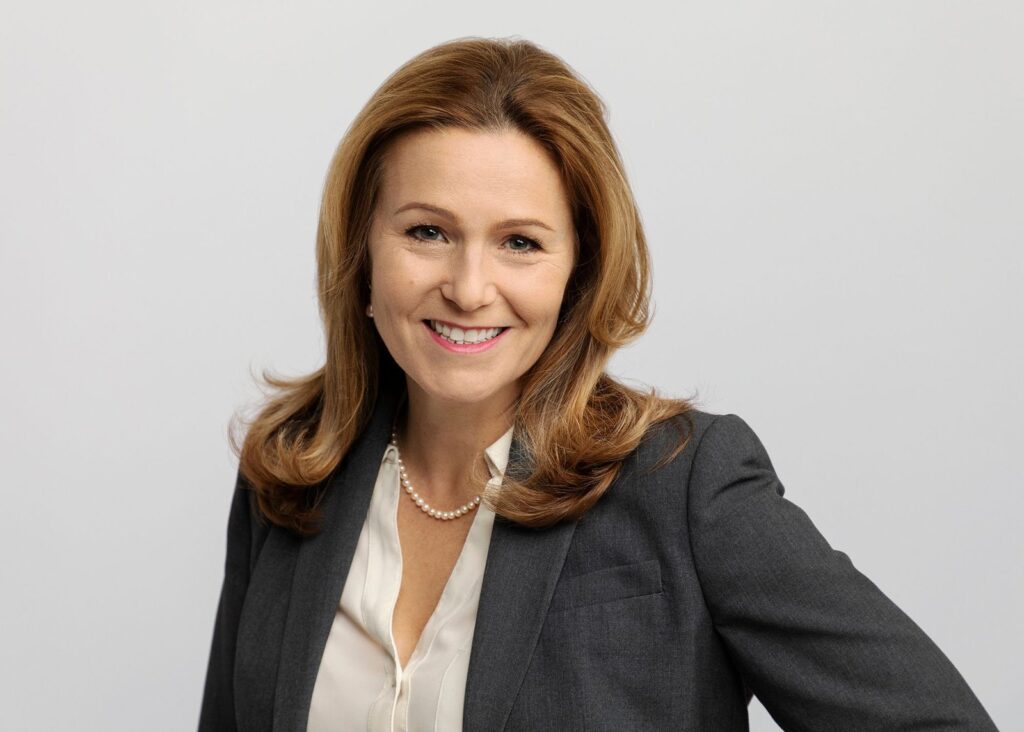
Jessica Rascionato is the head of commercial real estate at Citizens Bank, where she leads the bank’s $25 billion national CRE strategy with an emphasis on capital flows, financial trends and constantly evolving macroeconomic storylines.
Rascionato has been an executive at the bank for nearly a decade, helping guide it through COVID-19, Citizen’s $3.3 billion acquisition of Investors Bancorp in 2022, as well as the 2023 regional banking crisis and the ongoing macroeconomic dislocation amid higher tariffs, high interest rates, inflation and war with Iran.
Rascionato sat down with Commercial Observer to discuss her career, the current CRE market, what makes Citizens Bank different, and how she acquired the ability to speak four languages.
This conversation has been edited for length and clarity.
Commercial Observer: How did you get involved in commercial real estate finance?
Jessica Rascionato: I’ve been in financial services almost my whole career. I actually was a liberal arts major and started my career overseas in Moscow and was a translator for a while in New York. I quickly migrated into a banking career, via language, as I’m fluent in Russian, Italian and French and landed at a French Bank [Societe Generale]. So I spent a few years in New York doing international finance, European corporate finance, and then I got my MBA degree at Columbia Business School before joining GE Capital, where I was for almost 15 years doing a variety of things, as anyone who has spent time at GE Capital can attest — they move you around a lot as a high performer.
Why did you join Citizens Bank?
I’ve been here for the last 10 years, and real estate came into my career in a major way at Citizens Bank. So I joined as head of underwriting and portfolio for the corporate bank, and migrated over under an inquiry for the whole bank, including commercial real estate, all the verticals: asset finance, corporate finance, nonprofit, the whole shebang pretty much. And then three and a half years ago, I was asked to lead commercial real estate from a business line perspective. So real estate has been a major theme in my career for the last 10 years, but the underlying theme of my entire career is financial services.
How has your real estate strategy evolved in the last decade?
When we talk about the market internally, it’s usually a delineation of pre-imposed COVID [restrictions], but it overlays pretty well with your question of a 10-year look. So if you look at the late 2010s, there was a lot of activity — maybe unprecedented activity in the real estate market — given the combination of low interest rates, lots of liquidity, and a period of relatively low losses.
There weren’t the sort of the paradigm shifts that you see today in office, for example. A lot of loan growth from banks’ perspective occurred, including ours, but everything paused a bit during COVID, some due to the maturity wall effect. There wasn’t a lot of liquidity in the CRE space, the combination of post-COVID office, and the hike cycle in 2022, all that triangulating really slowed down the churn in balances. A lot of real estate sort of grinded to a halt, and banks weren’t putting out a lot of new capital because capital on their balance sheet wasn’t turning over.
For us, we publicly discussed this, but we had an additional component of our strategy, or influence on our strategy, in that we made a significant acquisition in Investors Bancorp in April of 2022, which doubled the size of our real estate portfolio from about $15 billion to $30 billion.
How did that acquisition impact your portfolio?
Favorably, actually, because pre-COVID we were a diversified book but office was our largest property concentration, with multifamily being No. 2. Following the acquisition of Investors Bank Corp., multifamily was our largest property type. So given what has transpired over the last few years in office, that has been a huge benefit. But getting back to your original question, 10 years ago loan growth was the priority. That time was a very low interest rate environment, but today there’s a lot more caution.
What do you hear from clients today?
This year, what we hear from clients, and what I observe in the market, is there’s still a fair amount of activity, given that the macro backdrop is not free from concern, just given where rates are — along with the upcoming election, the war in Iran, tariffs, especially last year’s tariff regimes. But there are still a lot of deals being concluded, and banks have come off the sideline in a big way.
We are back to originating. We’re probably more selective than many, given that we’re still at sort of the tail end of rates, as in where our balance sheet is, but as soon as liquidity started to return to the market, those maturity wall challenges that most banks faced translated into a lot of runoff.
What type of calculations do you need to make when you examine commercial estate from a lender standpoint?
The underwriting approach hasn’t changed that much, right? And it really shouldn’t. You should have an underwriting approach as a bank that allows you to migrate through different points in the cycle, through different macroenvironments. And I would characterize it in a couple of ways. Primarily, when you’re looking at underwriting risk, from a bank perspective, you’re looking at sizing. F
or instance, how much leverage can this project support, looking at the NOI that’s either expected or in place today? As well as the leverage being put on the property. What exactly would you expect? And not unlike other asset classes in financial services, you’re going to pay a lot of attention to the environment — so in this case, the market and submarket.
And you’re gonna look at the borrower, your past experience with that borrower, their credit profile, especially if they’re providing any sort of recourse, you’re gonna look to their wherewithal to help support the project and the mortgage that you’re contemplating.
How has the evolution of private credit impacted your real estate strategies?
I don’t think it has impacted our strategy in that we are still looking to support holistic relationships with our clients, and that has not changed.
What has changed, though, in the environment is that CRE used to have pretty well defined swim lanes. As an investor, as a real estate sponsor, you would look to your bank or capital partners to provide construction finance. That was one of the primary swim lanes of regional banks. And you would look to your life company partners or agency partners to term out construction financing, especially if you had an income producing asset. And you would look to get funds or JV capital, where maybe the leverage was a bit higher than banks would tend to extend, for a term that was a little longer.
During COVID, when banks either paused or were not as aggressive in terms of lending, I think the swim lanes got a little muddier. You saw terms start to conflate. Life companies might do shorter terms, and you might see debt funds creeping into spaces traditionally dominated by banks. Now there are more options for sponsors, given that there are multiple players in each swim lane. And I think that’s great from a liquidity perspective for the market, but it does mean that as a bank we now compete more with private capital than we initially did 10 years ago, when they were occupying a smaller margin of the overall space than they do today.
How did you help steer the bank th
Source: commercialobserver.com — article syndicated from the publisher’s feed; all rights remain with the original publisher.