
Record Diesel Prices Fuel More Challenges for Retail Real Estate
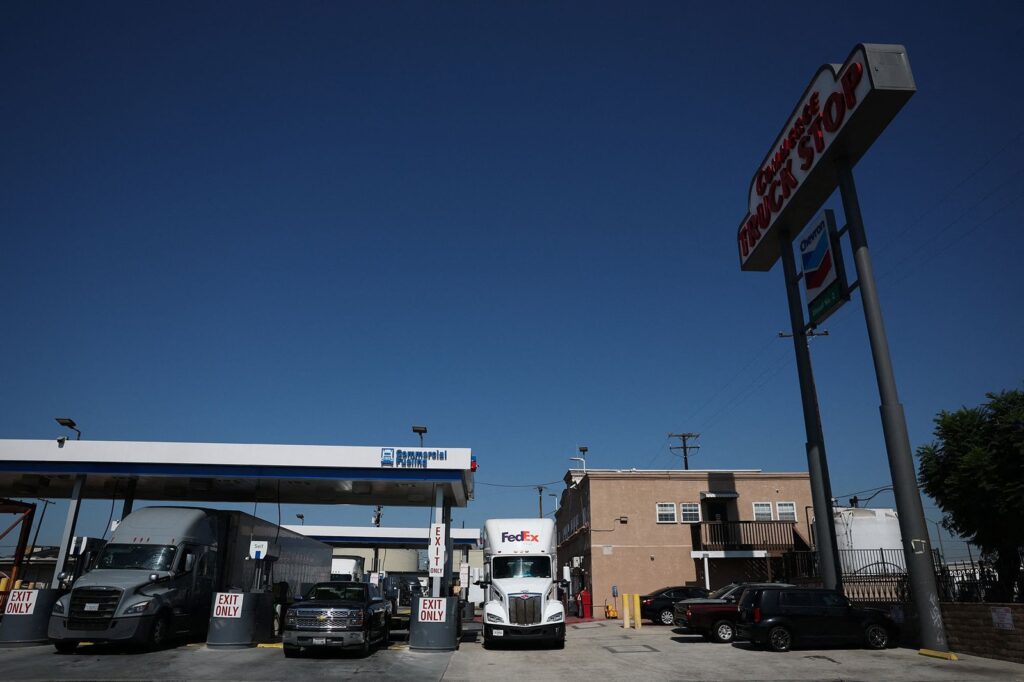
When it comes to diesel prices’ impact on U.S. retail, the pain at the pump is being felt in retailers’ real estate strategies.
Diesel fuel, a key component of transportation costs that impacts the pricing of nearly every item on Americans’ shopping lists, surpassed an all-time average high of $6 per gallon in September. Businesses have contended with diesel’s painful price hikes since the U.S.-Iran conflict began in late February, when the motor fuel’s average cost hovered around $3.81 per gallon, according to the U.S. Energy Information Administration.
As of Sept. 28, diesel averaged $6.38 per gallon.
Diesel costs present a real and present pain point for brick-and-mortar retail developers. The sector has long struggled under chronically flat retail rents, analysts told Commercial Observer. Construction spending increased more than 42 percent between August 2020 and August 2026, according to the U.S. Census Bureau. Meanwhile, retailers’ compressed profit margins cannot accommodate the higher rents required for new development, despite resilient balance sheets and aggressive expansion plans.
Sector analysts say current consumer purchasing power appears sufficient to keep the market operating at healthy levels in the near term. The lagging impacts of diesel costs continue to trickle down through the economy, however.
“Given what happened with oil prices, retail margins were actually better in the second quarter than I expected,” said Brandon Svec, CoStar Group’s national director of U.S. retail analytics.
“But we definitely did see some compression across most retailers. Very few retailers reported higher margins after you account for the tariff refund checks.”
In the near term, analysts like Svec expect higher costs to make new retail supply harder to achieve.
“While higher oil prices and tariffs are a material concern when you think about longer term — three, five, seven years out — revenue growth is going to be really hard to hit if retailers aren’t able to expand their store fleets the way that they’re currently anticipating,” Svec said. “Without a material increase in supply, there is not enough quality space to go around for all of the retailers who have announced thousands of store openings.”
Competition for retail real estate is particularly fierce right now. Retailers moved into more space in the second quarter of 2026 than in any quarter since 2022, when higher post-pandemic interest rates hit, according to CoStar data.
Retail construction in the second quarter of this year was “historically strained nationwide,” according to a JLL report, which cited net absorption rising to 10.2 million square feet and a total vacancy of just 4.4 percent. It was an especially impressive quarter for free-standing and single-tenant retail, the report said.
Grocers such as Whole Foods and Aldi are planning new locations across the U.S., as are discount clothing stores like T.J. Maxx and Burlington.
The value sector, in particular, has announced a flurry of planned expansions nationwide over the past 12 months, largely thanks to an expanding customer base of budget-conscious Americans. Dollar Tree opened 402 new stores in 2025 and shared plans for 400 more in 2026. Its competitor, Dollar General, launched the first $1.6 billion phase of its plan to significantly renovate stores, including adding 450 new locations this year.
Retail-focused real estate investment trusts’ (REITs) recent second-quarter earnings calls were also supportive of future demand, as well. Kimco, a REIT of grocery-anchored strips, reported record-high occupancy in August, alongside rent increases for new leases. David Jamieson, Kimco’s executive vice president and chief operating officer, told investors he anticipates more acquisitions, counterbalanced by cap rate compression from “all the capital that’s chasing the unanchored strip format.”
Beyond hot spots like Dallas and Phoenix, new shopping centers and stand-alone retail properties in the five-year pipeline are few and far between. In other words, it’s a good time to be a retail landlord. Their tenants, on the other hand, are feeling a bit claustrophobic.
Supply constraints vary by property type and geography, but, on the whole, retail vacancies are lower today than at the start of the year, according to CoStar data, and rents remain strong.
As of September, just over 60 million square feet of retail space was under construction — just 4 percent above the all-time historic low of under-construction space since CoStar started tracking the market 25 years ago.
No matter how much their consumer base expands, the Burlingtons and Dollar Stores of the world are limited in what they can afford to lease, said James Cook, JLL’s senior director of Americas retail research.
“If you’re a retailer, on the one hand, you’re saying, ‘Oh man, shoppers really want the value offer I have right now.’ On the other hand, you’re really struggling to find a place to open your store,” Cook said.
When construction costs are on such a sharp rise, diesel runs $6 and retailer margins are contracting, there’s not much motivation for developers to fire up the excavator, or for retailers to pay up on new properties. Sluggish rent growth dates back to the Global Financial Crisis, Svec said, and accompanied the rise of big-box bankruptcies and e-commerce shopping.
“Rents have not risen at near the same pace in retail as what we’ve seen in other asset types over the last 15 years,” Svec said. “There’s now a substantial gap between what it costs to build a retail center today and where market rents are currently at.”
Newly developed retail properties today are heavily concentrated in areas that provide developers perks, like tax incentives and entitlement zoning. They’re also trending toward built-to-suit spaces for large merchandisers like Walmart, grocery store chains and quick-service restaurants. As a result, less than 30 percent of new retail sites are available to lease, according to CoStar data.
Some recent expansion opportunities have come from a backfill of retailer closures over the past 18 months, with replacement retailers rushing in to fill the second-generation spaces at lease terms below market rates. That trend was exemplified by Burlington’s aggressive acquisition of Joann’s retail spaces last year, taking over 45 leases from the big-box retailer.
“If
Source: commercialobserver.com — article syndicated from the publisher’s feed; all rights remain with the original publisher.