
Century Communities HistoryMaker deal marks scale pressure shift
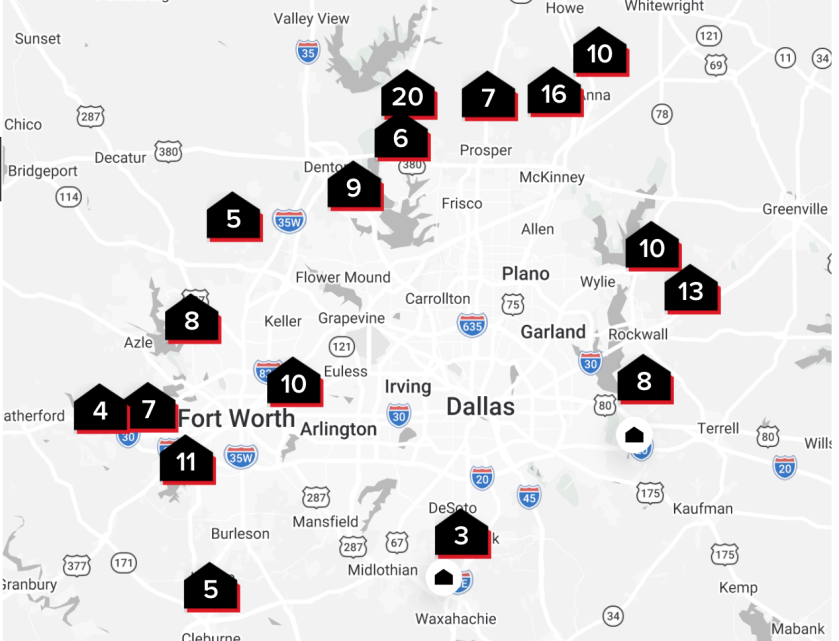
For Century Communities, acquisition of a five-generation Texas homebuilder had a simple motivation: Expand its Dallas-Fort Worth footprint to compete seriously there with the big guys.
For the seller, and more and more privately-capitalized players in such ferocious arenas as these, the deal reflects the economic realities of competing against the industry’s giant enterprises. This tilted playground sharply alters the choices facing private builders, forcing up their costs for getting closer to customers in a market where every sale counts.
Century Communities’ acquisition of HistoryMaker Homes comes early in Q4 2026, at a moment the homebuilding industry’s largest companies have learned that size alone is no longer enough. Scale and size are not the same.
What matters increasingly is where that size is concentrated, how effectively it translates into lower costs and whether a builder can turn its market presence into a lasting advantage with customers, land sellers, trade partners and local communities.
”Lasting advantage,” being a euphemism for reliably and sustainable profitable and value-building for shareholders. More Q4 2026 M&A deals are likely to follow.
The transaction, announced Oct. 8, triples Century’s community count in Dallas-Fort Worth, the nation’s largest new-home market, while adding a substantial pipeline of lots and the operating team of one of Texas’ most established private homebuilders. For Century, whose existing Dallas business has lacked the depth of some of its largest competitors, the acquisition offers a chance to become a more formidable local operator almost overnight.
For HistoryMaker, founded in 1949 and led by fifth-generation family executive Nelson Mitchell, the decision reflects a different reality. Even a well-run, deeply rooted private builder with a respected brand, experienced leadership and an increasingly sophisticated operating platform faces a difficult competitive equation when nearly every major publicly traded, Japanese-owned and Berkshire Hathaway-backed builder is fighting for customers in the same market.
The deal illustrates four forces reshaping homebuilding: the growing importance of concentrated local scale, the competitive pressures on regional private builders, the value of entrepreneurial cultures in successful acquisitions and the changing sources of capital driving industry consolidation.
Scale where it counts, and how it works
Century Communities operates across 16 states and more than 45 markets, but its national footprint has not necessarily translated into sufficient competitive strength in every local market.
According to background provided by Richard Moriarty, managing partner of Vestra Advisors, which advised HistoryMaker on the transaction, Century’s Dallas-Fort Worth business has been operating at approximately 200 to 300 annual homes. The combination could bring that volume toward 800 homes, with a path toward 1,000.
That change matters far beyond the number of houses sold.
A builder delivering 1,000 homes in a concentrated market can potentially spread its fixed operating expenses across more closings, improve purchasing terms, strengthen trade relationships and make more efficient use of construction management, sales, marketing and customer service resources. Even modest per-home savings, multiplied across hundreds of additional deliveries, can have a meaningful effect on EBITDA and net margins.
Scale also improves a builder’s standing in the local ecosystem. Land sellers gain confidence in a buyer’s ability to execute, subcontractors see a more dependable source of work, and municipalities work with an organization that has the personnel and resources to navigate increasingly complicated approval and development processes.
The challenge is converting those opportunities into actual operating improvements rather than simply adding volume.
“HistoryMaker Homes gives us the scale, land position, and local talent to accelerate our growth in Dallas-Fort Worth, one of the largest housing markets in the country,” Century CEO Rob Francescon said in announcing the transaction.
The acquisition fits a pattern. Century’s purchases of Anglia Homes in Houston and Landmark Homes in Nashville likewise expanded its position in markets where stronger local presence could support long-term growth.
The private builder’s increasingly difficult choice
HistoryMaker’s sale is particularly revealing because the company was not standing still.
As HousingWire TBD has reported over the past year, HistoryMaker President Zac Thompson and his leadership team have been rebuilding the company’s operational and digital capabilities around a more complete understanding of the customer. Their work has included connecting previously separate business systems, improving access to operating data and developing an AI-ready technology platform designed to support faster, better-informed decisions.
The underlying principle was straightforward: Start with the customer, determine what the customer values enough to pay for, and organize the business to deliver that value reliably and profitably.
Yet even that kind of operational progress cannot fully offset the disadvantages of competing in a market where much larger companies command extraordinary concentrations of land, capital, purchasing power and sales volume.
Dallas-Fort Worth has become a particularly demanding environment for private builders. Large competitors can use incentives, mortgage-rate buydowns, aggressive pricing and extensive inventory positions to defend market share, even when those measures put pressure on margins.
For a smaller builder whose operations are concentrated in the same competitive territory, the financial consequences can be severe. The challenge is not necessarily a failure of management or strategy. It is that the economics of competition are changing faster than many private companies can increase their scale.
HistoryMaker’s ownership chose to separate the homebuilding business from other real estate activities where the family believes it can retain a stronger competitive position.
Its sister companies, Jabez Development and build-to-rent operator ONM Living, remain independently owned. Jabez will continue developing selected communities for Century, and the two companies expect to pursue additional land opportunities together.
Richard Moriarty, managing partner of Vestra Advisors, which advised HistoryMaker on the transaction, described the broader significance in an email to HousingWire TBD:
“The transaction is representative of the M&A market today which remains healthy, with acquirors using acquisitions to increase scale in markets where they are underpenetrated. Sellers are using the window to exit at healthy valuations and redeploy into land development, where local relationships and entitlement expertise give them a durable competitive advantage, while continuing to sell finished lots to the acquiror.”
That arrangement suggests a potentially important model for private builders confronting the next phase of consolidation: Sel
Source: www.housingwire.com — article syndicated from the publisher’s feed; all rights remain with the original publisher.