
Senate Bill Offers Data Centers A Faster Path To Power, But At A Price
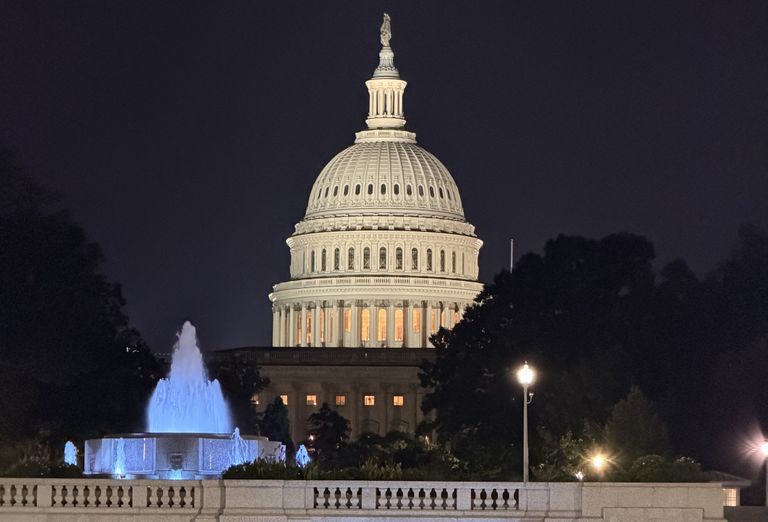
A landmark permitting reform bill has united U.S. senators from both parties, but it is dividing the artificial intelligence data center sector. Some industry leaders say it would make data centers easier to build, while others worry it would make them substantially more expensive.
Bisnow/Jon Banister
The Bipartisan American Affordability and Jobs Act is being called “the most significant permitting reform bill in years” — intended to accelerate the build-out of major infrastructure and other large-scale projects across the U.S. The bill enjoys support on both sides of the aisle and is expected to clear the Senate during the lame-duck session following November’s midterm elections.
If it is signed into law, BAAJA would likely have significant implications for the data center industry, potentially rewriting the federal rulebook on how data centers purchase electricity and connect to regional grids. But industry insiders are split on whether the legislation would ultimately be a net positive for the sector or usher in disaster for at least some firms pursuing large-scale digital infrastructure projects.
Some within the industry — and some critics of the sector — say BAAJA is poised to fuel further acceleration of the AI data center boom by flattening permitting hurdles and codifying a clear pathway to acquiring power.
But others say consumer protection provisions in the bill will make acquiring power much more expensive, adding significant development costs early in projects that could push smaller operators to the sidelines.
“Upfront capex, especially speculative, is a death knell,” said Harmol Samra, CEO of AI data center provider Host Digital. “This is just going to slow everyone down.”
BAAJA is centered on measures intended to speed up the construction of energy assets, power transmission and other infrastructure, plus other major industrial projects for industries like manufacturing and mining. To do so, the bill would impose firm deadlines for permit approvals, exempt more projects from lengthy reviews, limit how long approvals can be challenged and give previously approved projects greater legal protection. Controversially, it would also make significant changes to the National Environmental Policy Act, the Clean Water Act and the Endangered Species Act.
Those provisions have drawn vocal opposition from some environmental groups, with the Center for Biological Diversity calling it a “back-door deal” meant specifically to accelerate data center development.
“This would be a golden ticket for huge AI data centers and tech billionaires. Gutting environmental safeguards means opening the floodgates for more gas-powered data centers fouling the air and draining communities’ water supplies,” said Camden Weber, senior climate and energy policy specialist at the Center for Biological Diversity.
While other environmental groups have been more receptive — particularly to provisions aimed at accelerating transmission infrastructure that could bring more renewable generation onto the grid — there is truth in the notion that data centers will benefit from faster permitting.
Large campuses can face federal delays when projects affect wetlands or trigger environmental or historic preservation reviews. More consequentially, faster approvals for new transmission and generation could shorten the wait for electricity in markets where developers can wait years for grid connections.
Yet beyond its permitting reforms, BAAJA also contains a separate set of provisions aimed squarely at data centers, specifically at one of the sector’s most contentious issues: who ends up paying for the billions of dollars of new power infrastructure needed to provide them with electricity.
The measures, which apply to data centers larger than 20 megawatts, are intended to ensure that regular electricity customers don’t get stuck with the bill for new power plants and infrastructure for electric transmission built specifically for data centers.
Concerns that homeowners, businesses and other existing customers are effectively subsidizing grid improvements driven mainly by data center demand have become a central talking point in a rising wave of opposition to data center development. And lawmakers from both parties have been eager to show they are taking these concerns seriously.
The Trump administration’s Ratepayer Protection Pledge, announced in March, aimed to address the same concern, with major tech firms committing to cover the full cost of power delivery and grid updates needed to serve them. But what constitutes “full cost” has remained a matter of interpretation.
A report released this month by four Democratic senators found that tech giants generally accept responsibility for the cost of infrastructure built exclusively for them, such as a substation serving a single data center campus. But the answer is murkier when the new infrastructure also benefits other customers, such as a transmission line built primarily to deliver power to a new campus that also improves reliability elsewhere on the grid.
Consumer advocates have argued that in such a case, the data center should bear all costs that would not have existed “but for” its arrival. Tech giants and other developers, according to the report, have generally only been willing to cover, at most, a portion of such shared costs and have fought with state regulators to shoulder as few of such shared grid costs as possible.
“There is a significant gap between data center developers and the public regarding how much data centers should pay for shared infrastructure, and particularly for infrastructure built primarily, but not exclusively, for their benefit,” the report’s authors wrote.
Wikimedia Commons/Chris Hunkeler
The standards for what constitutes a data center’s fair share of grid costs vary significantly across the balkanized U.S. grid system. The BAAJA legislation, if passed, would establish more uniform ratepayer protection measures across the entire U.S. grid. The bill would require large data centers to pay grid costs that would not have been incurred without their demand, not just upgrades that benefit them exclusively.
For developers, the most pressing question is how much additional capital these requirem
Source: www.bisnow.com — article syndicated from the publisher’s feed; all rights remain with the original publisher.