
Alexandria Sells Stakes In Megacampuses To Weather Life Sciences Downturn
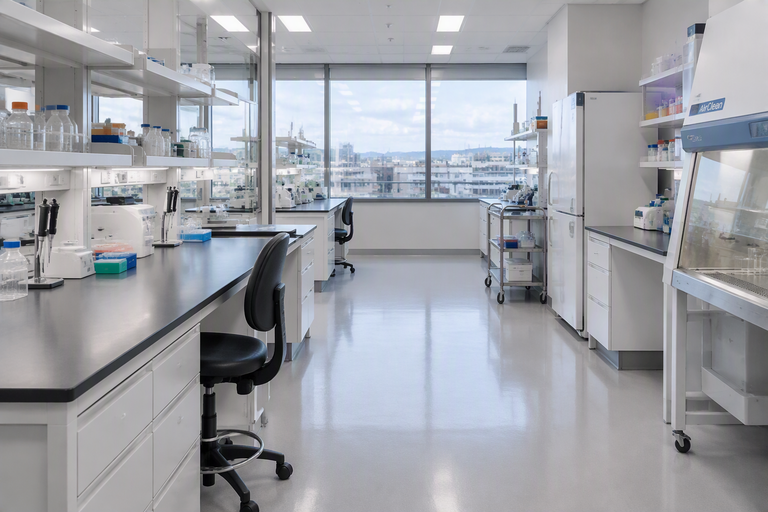
Alexandria Real Estate Equities is shedding portions of some of its marquee life sciences campuses as the REIT grapples with shifting priorities in a biotech market that remains oversupplied and slow to recover from the pandemic-era building boom.
During the third quarter, Alexandria sold assets in each of the big three biotech markets and, so far in October, has agreed to sell a stake in its Campus Point project in San Diego and entered into a purchase and sale agreement for a megacampus in Boston.
The transactions came alongside a $638.5M quarterly loss, declining rents and tenant projections indicating more bleeding to come.
While Alexandria expects 1.25M SF of leasing in Q4, the company forecasts 1.4M SF of lease expirations in early 2027 that will take anywhere from nine to 24 months to fill up.
Bisnow/created with Copilot
“Considering elevated laboratory supply, there can be no assurance that we will be able to re-lease some or all of this space on acceptable terms, without significant capital expenditures, or within anticipated time frames, even at reduced rates,” the company said in its most recent 10-Q.
Another 717K SF of key lease expirations are forecast for 2028.
To aid in riding out these market challenges, Alexandria raised $1B through an August debt offering and renegotiated its $5B credit line for a more favorable maturity date and interest rate.
Alexandria is “well into” the shift from the Covid rocketship era of the biotech market, and “that transition is never simple and takes a fair amount of time,” Chairman Joel Marcus said during the company’s earnings call Tuesday.
The company has made deals involving its megacampus properties, long heralded as crown jewels, including the sale of a 29% controlling interest in Campus Point by Alexandria, a megacampus in San Diego, for $475M.
In addition, Alexandria entered into an agreement to sell its interest in 421 Park Drive at the Fenway Megacampus in Boston, which will reduce its construction spend by $136M. Closing is anticipated in Q4 2026.
Additional sales are under consideration, Chief Financial Officer Marc Binda said during the call. These include a total of 667K SF split between 40 Sylvan Road in the Waltham Megacampus and 3000 Minuteman Road in the Andover Megacampus near Boston. Both, he expects, would be good fits for advanced tech tenants.
Alexandria’s sale of assets to fund its current construction pipeline, known as asset recycling, saw some significant sales volume. The company has sold $717M via asset recycling as of Oct. 26. The program still has $1.2B in sales required to meet its goals for the end of the year, but traditionally, Alexandria has made the bulk of its sales during Q4.
Binda affirmed his belief that it will hit its sales targets this year.
Key metrics showed a continuing slide after a punishing first half of the year. Rental rates dropped a further 2.4%, and net operating income dropped 6.7% quarter-over-quarter, with a 9.2% total drop year-to-date.
Alexandria noted a significant upswell in leasing volume compared to recent quarters, but not nearly enough to change its longer-term trajectory. A total of 450K SF of new leases were signed in Q3, and 785K SF of lease renewals and releasings of space brought the quarterly total up to 1.2M SF.
Occupancy inched up to 87.1% from 86.9% last quarter, again indicating positive momentum but not a significant shift in vacancy across Alexandria’s portfolio.
Alexandria also delivered roughly 529K SF, including about 200K SF to Novo Nordisk for its R&D Center at 60 Sylvan Road. That new space was 84% occupied at delivery, which adds up to about 44K SF.
The REIT forecasts another 905K SF of projects, currently at 77% leased, are set to deliver in 2027 and 2028. That’s a much more remarkable figure considering just how much of the previous construction pipeline has been sold off or shut down. From Q4 2025 to today, the pipeline was reduced by more than half, Binda said.
In addition, Alexandria has leaned further into leasing to nontraditional tenants, especially advanced tech users, as more traditional sectors continue to struggle. Just 1.1% of new leases this quarter came from public biotech companies.
Properties like 311 Arsenal St. in Watertown, Massachusetts, are now half filled with advanced tech tenants, which tend to have lower capital expenditure requirements and collect significantly lower rent.
“They’re very attracted to our mega campuses for their recruitment and retention, as well as our wonderful infrastructure that is quite well suited to their businesses,” Marcus said of the increased advanced tech interest in Alexandria real estate.
The market is brutal for life sciences across the nation. Savills data shows increased or plateauing vacancy in San Diego at 27.6%, Boston at 35.4% and San Francisco at 23.8%.
Source: www.bisnow.com — article syndicated from the publisher’s feed; all rights remain with the original publisher.