
Why didn’t the strong jobs report send mortgage rates skyrocketing?
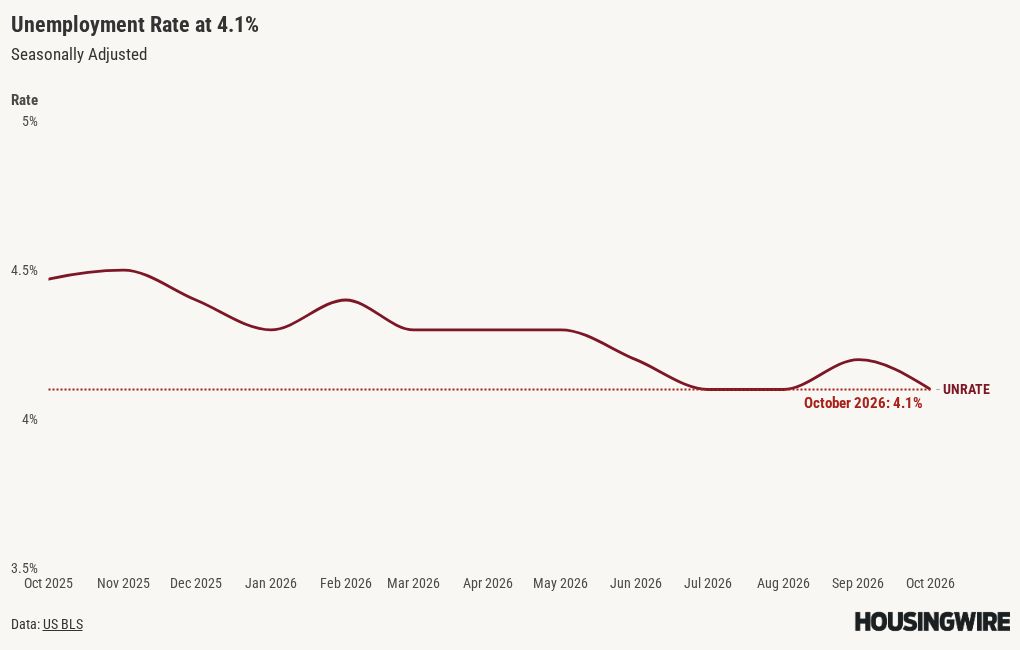
With all the crazy things happening this week, the blowout jobs report on Friday didn’t send mortgage rates up at all. But one thing is for sure: the labor market has been better in 2026 than it was in 2025. I once labelled the labor market the honey badger labor market and no matter what has been thrown at the U.S. economy after 2011 — outside the brief recession created by COVID-19 — the labor data has held up well.
Let’s dig into why very strong jobs report didn’t push yields or mortgage rates higher, as we would normally expect with the Fed being so hawkish in their statement.
From BLS: Total nonfarm payroll employment rose by 165,000 in October, and the unemployment rate changed little at 4.1 percent, the U.S. Bureau of Labor Statistics reported today. Employment increased in professional and business services, in health care, and in transportation and warehousing.
The labor data has improved enough that we have gone from a 4.5% unemployment rate last year to 4.1% today. Part of this is that labor-force growth has slowed and the break-even number has decreased, meaning fewer jobs are needed to keep the unemployment rate low. I have my break-even at 78,000 jobs created per month; I believe the Fed’s is 33,000. Some economists have it at zero, which I think is silly. In any case, the unemployment rate is lower this year versus last year.
Now, the low point in the COVID-19 recovery was about 3.4% unemployment back in 2023, so the unemployment rate has increased from that low, but it’s still good enough to keep the Fed’s focus on inflation instead of labor.
Jobs breakdown
This month’s report had growth in a few sectors, especially the business services sector jobs with one of the biggest monthly prints in years. There was also growth in manufacturing, and transportation & warehouse, while construction jobs faded a tad.
Construction labor will be interesting in the future if mortgage rates stay elevated and short-term rates go up. If there is an AI slowdown and fewer AI data centers are being built, will this sector start to decline?
One of my most critical recession indicators, residential construction employment, doesn’t look great lately, but it isn’t looking terrible either. In previous cycles, you can see a clear downtrend in this labor pool, which hasn’t happened in this cycle. With builders doing more rate buydowns — which have kept new home sales at 2019 levels over the past few years — and remodeling work holding up, this clear recession indicator hasn’t broken yet.
10-year yield and mortgage rates
As crazy as this week has been, the jobs data wasn’t the big driver of mortgage rates as much as AI stock prices. CoreWeave’s stock price was up 10% pre-market today, and bond yields ticked up with that. The jobs report didn’t do much to yields, we just saw a mild increase and then they fell back in line with the trend. Then CoreWeave stock price went almost negative, bond yields fell to the lows of the day, and now both have picked up from the lows! The market needs a weekend break.
Mortgage rates ended the day flat at 7.17%, so as crazy as this sounds, the blowout jobs data didn’t send mortgage rates or bond yields much higher. That’s good news for rates, and there are some levers the new Congress can pull to potentially get rates even lower, which I discussed on today’s episode of the HousingWire Daily podcast with Editor in Chief Sarah Wheeler.
Conclusion
A lot has changed this week for the economy regarding the bond market and where mortgage rates can go. The blue wave has raised hopes that the trade war and the conflict with Iran can end soon, AI companies have shown they can bleed, and Congress will try to slow the AI boom as much as it can without crashing it. All these things happened this week, so that even with four solid jobs reports during jobs week, the 10-year yield closed at 4.86% and mortgage rates closed at weekly lows.
Source: www.housingwire.com — article syndicated from the publisher’s feed; all rights remain with the original publisher.